

In September we shared a checklist for getting your plant ready for cold weather. Now that the season is winding down, the next step is the shutdown itself. Winter is the best window of the year to fix what has been nagging you, but only if the work is planned before the plant goes quiet.
Here is a simple playbook for turning the off-season into a stronger spring.
1. Walk the Plant While It Is Still Running
Some problems are easiest to find while material is moving. Before you shut down, walk the plant with your operators and maintenance lead and write down what you see and hear:
- Unusual noise, vibration or heat at crushers, screens, drives and bearings
- Spillage and carryback at transfer points, and worn skirting or belt cleaners
- Screens that are blinding, pegging or making off-spec product
- Chutes that plug or wear through faster than they should
- Anything your crew has been working around all season
Your operators know where the headaches are. Ask them. A list built in October or November beats one built from memory in January.
2. Turn the List Into a Ranked Work Plan
Not everything can get done in one winter, so sort the list. A simple way is to put each item into one of three groups:
- Must fix: safety issues and anything that would stop production if it failed.
- Should fix: items that are costing you tons, uptime or product quality.
- Can wait: nice-to-have improvements that can go on next year's list.
For each must-fix and should-fix item, note the parts needed, who will do the work (your crew, a contractor or both) and roughly how long it will take. That becomes your shutdown schedule.
3. Decide What to Rebuild and What to Replace
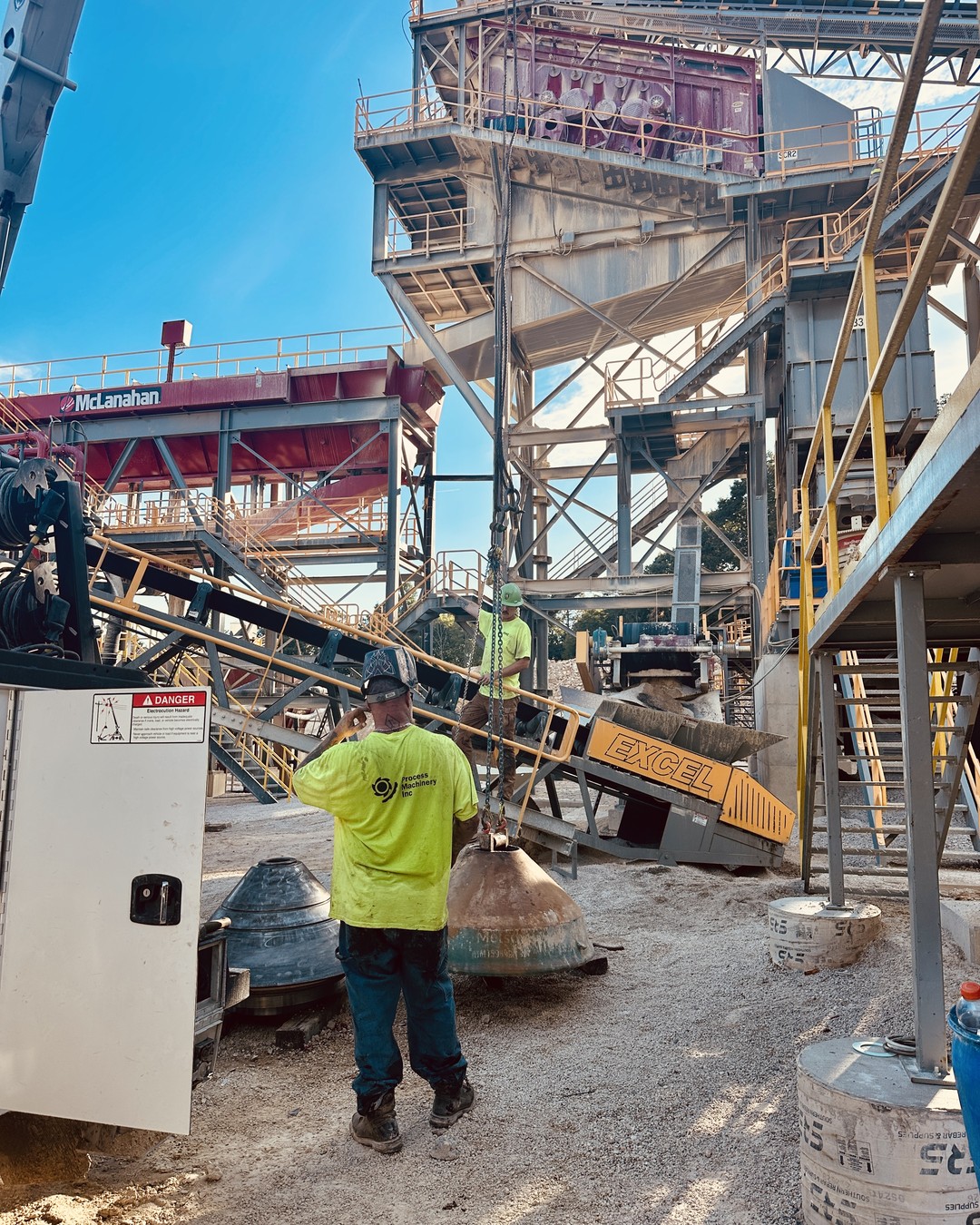
Winter is rebuild season. Before you commit, look at the age of the machine, how often it has been down, how parts availability looks and whether a newer design would solve a recurring problem. Some older machines are still very capable. Others cost more to keep rebuilding than to replace.
Rebuilds are a big part of what we do. Since 1979, PMI has rebuilt and serviced cone, jaw and impact crushers, gyratory machines, screens and feeders, along with a wide range of other processing equipment, in our Shelbyville service department or on site.
4. Line Up Parts and Crews Early
Everyone shuts down at about the same time, so service crews, rebuild slots and certain parts get spoken for quickly. If you know a crusher needs a rebuild or a conveyor needs to be replaced, get that work scheduled with whoever is doing it as early as you can.
Order wear parts and long-lead components as soon as your list is final. Our parts team works with more than 300,000 parts from 20 leading manufacturers and can help you build a replacement parts program so the right parts are on the shelf before you need them.
5. Keep Safety at the Center of Shutdown Work
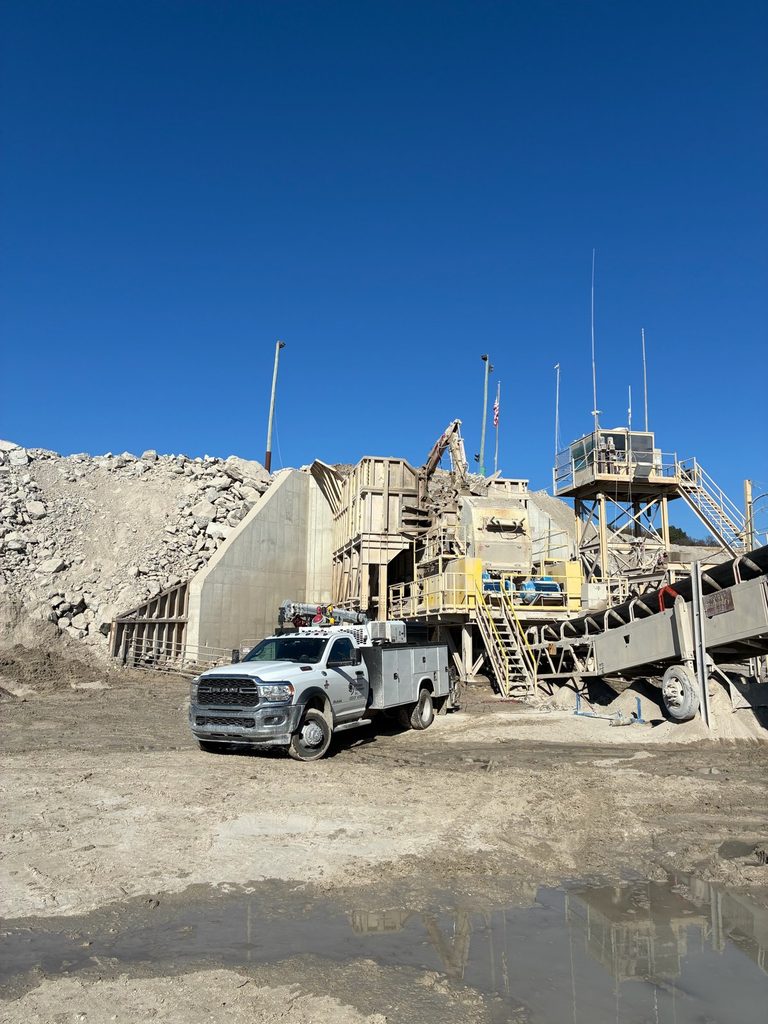
Shutdown work often means more people, more contractors and more equipment opened up at once. Review lockout/tagout procedures, make sure everyone on site has the right MSHA training and hazard awareness, and plan crane lifts and confined space work ahead of time. Our field crews are MSHA trained, and their training records and safety paperwork are kept digitally, so they're easy to pull up when a site asks. They also work with each site's safety rules.
6. Set Up a Fast Spring Startup
Write down what was done, what parts were installed and what still needs attention. Store spares where they are easy to find, and schedule your pre-startup inspections now. Plan time for performance checks and fine-tuning once material is moving again, and refresh operator training before the season starts.
Questions? For parts, email parts@emailpmi.com. For service, email service@emailpmi.com.