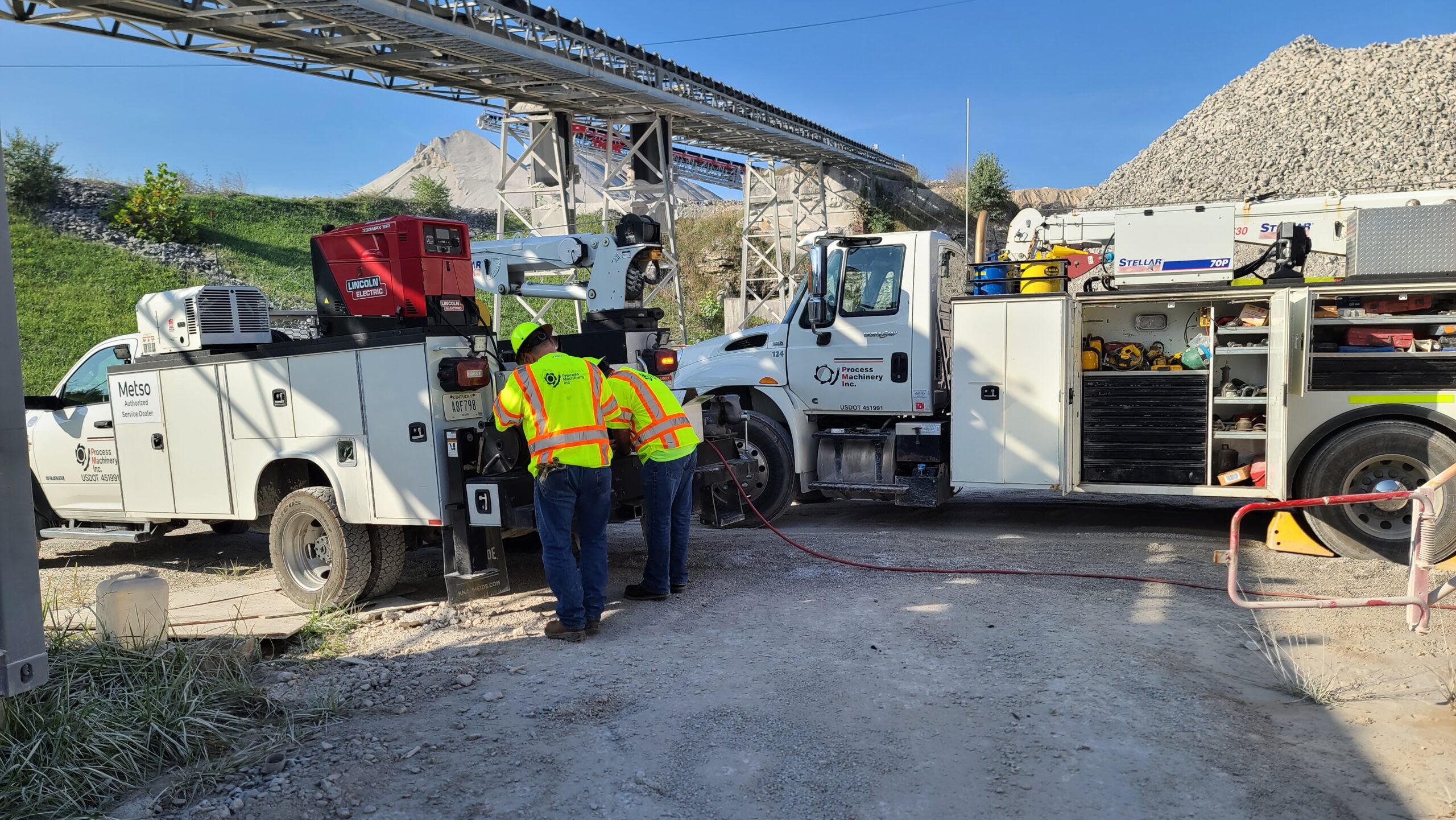
Summer production can take a toll on equipment. Before winter arrives, inspect components throughout the plant for signs of wear, cracking, damage, or deterioration.
Pay particular attention to:
- Conveyor belts, splices, and cleaners
- Hydraulic hoses and fittings
- Crusher and screen wear components
- Bearings, seals, and guards
- Skirting and transfer-point components
Replacing a worn component during planned maintenance is much easier than dealing with a failure on a freezing January morning. 🥶🔧
3. Protect Water Systems
For wash plants and other equipment that uses water, freezing temperatures require additional planning.
Inspect pumps, hoses, valves, tanks, and piping for leaks or areas where water can collect. Develop procedures for draining or protecting components that could be damaged by freezing when equipment isn’t operating.
Don’t wait for the first hard freeze to figure out where water is hiding.
4. Give Mobile Equipment Some Attention
Mobile crushers, screens, and conveyors bring their own cold-weather considerations.
Inspect batteries and electrical connections, hydraulic systems, fuel and fluid levels, tracks, and other critical components. Follow the manufacturer’s cold-weather operating and warm-up procedures for your specific equipment.
A few extra minutes of preparation can go a long way toward keeping mobile equipment dependable when temperatures fall.
5. Stock Critical Wear & Spare Parts
Cold weather isn’t the time to discover you’re missing the part needed to get production moving again.
Review your critical spare parts inventory now and consider the components your operation can’t afford to be without. Depending on your equipment, that may include wear parts, bearings, belts, hoses, filters, screen media, conveyor components, or other commonly replaced items.
Your PMI sales representative can help review your equipment and identify parts worth keeping on the shelf before winter arrives.
Don’t Let Winter Catch Your Plant Cold 🪨❄️
Cold-weather preparation doesn’t have to be complicated. Inspecting equipment, addressing wear, reviewing lubrication, checking crusher oil-tank heaters, protecting water systems, and stocking critical parts now can help prevent unexpected downtime later.
If you’re not sure where to start, Process Machinery’s parts and service teams can help you prepare your operation for the colder months ahead.
📞 1-800-860-1523
📧 sales@emailpmi.com
Plan now. Stay ahead of the freeze. Keep the rock moving. 💪🪨